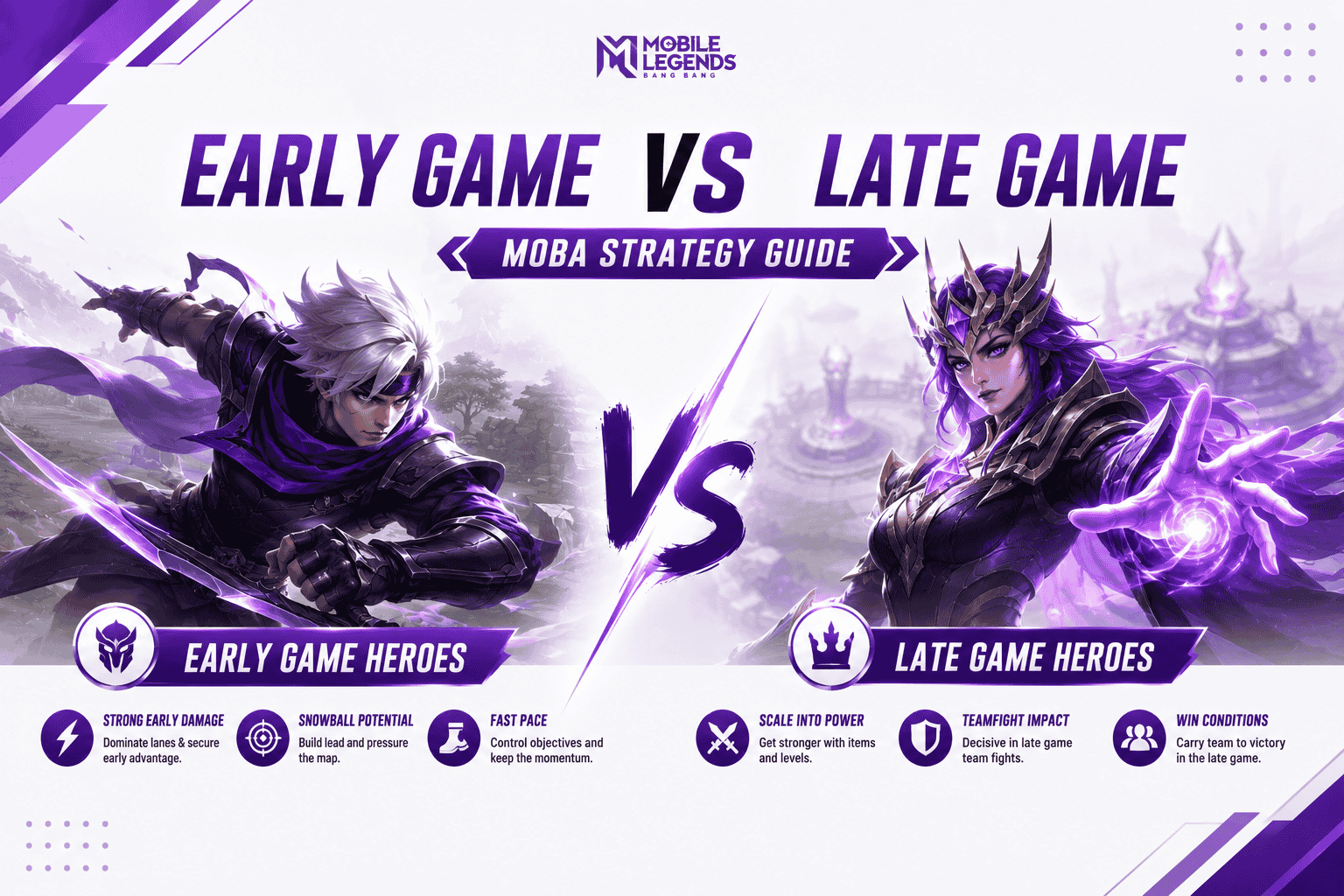

For years, the jungler role was synonymous with the assassin. If you played jungle, you picked a highly mobile ninja with dual blades, farmed until you were terrifying, and single-handedly deleted the enemy team. Today, the mobile esports meta looks nothing like that.
Watch any professional mobile MOBA tournament — the MLBB Professional League (MPL), the Honor of Kings International Championship (KIC) — and you'll see something completely different. Instead of fragile assassins, massive, heavily armored tanks walk straight into the jungle.
This is the great debate of modern mobile MOBAs: assassin junglers vs. tank junglers. Which playstyle actually wins games? Why do pros favor tanks? And which one should you play to climb the ranked ladder? Let's break it down.
The Classic Assassin Jungler
The assassin jungler — heroes like Ling, Hayabusa, or Gusion in MLBB — is the traditional jungle carry, built around a high-risk, high-reward playstyle.
Strengths
- Unmatched mobility: Assassins dash through walls and cross the map in seconds, letting them farm camps incredibly fast and escape dangerous situations.
- Lethal burst damage: A well-fed assassin can kill the enemy marksman in under a second, removing the enemy's main damage source before a team fight even begins.
- Solo carry potential: An assassin doesn't need their team's permission to get a kill — if they see an opening, they take it.
Weaknesses
- Extremely squishy: A single stun (crowd control) is often enough to kill an assassin instantly.
- Gold dependency: An assassin who falls behind in gold becomes nearly useless — no damage, no defensive utility to offer the team.
The Rise of the Tank Jungler
The tank jungler — heroes like Fredrinn, Baxia, or Barats — represents a major shift in MOBA strategy. Once developers made the Smite/Retribution spell scale with a hero's maximum HP, tanks could clear the jungle just as fast as assassins.
Strengths
- Unkillable early game: By minute five, a tank jungler is practically immortal — they can walk into the enemy jungle, steal buffs, and shrug off damage.
- Superior objective security: Their bulk lets them stand directly in the Lord or Turtle pit, absorb enemy damage, and time Retribution perfectly to secure the objective.
- A second frontline: With a tank in the jungle, the team's roamer is free to pick a dedicated support healer (like Estes or Mathilda) instead of playing a second meat shield.
Weaknesses
- Zero solo-kill potential: A tank jungler deals very little burst damage. If teammates can't deal damage, the tank can't win the game alone.
- Slow rotations: Tanks can't dash across the map to answer a sudden gank on the opposite side.
The Great Objective Battle: Retribution Timing
The main reason professional teams heavily favor tank junglers is the objective battle.
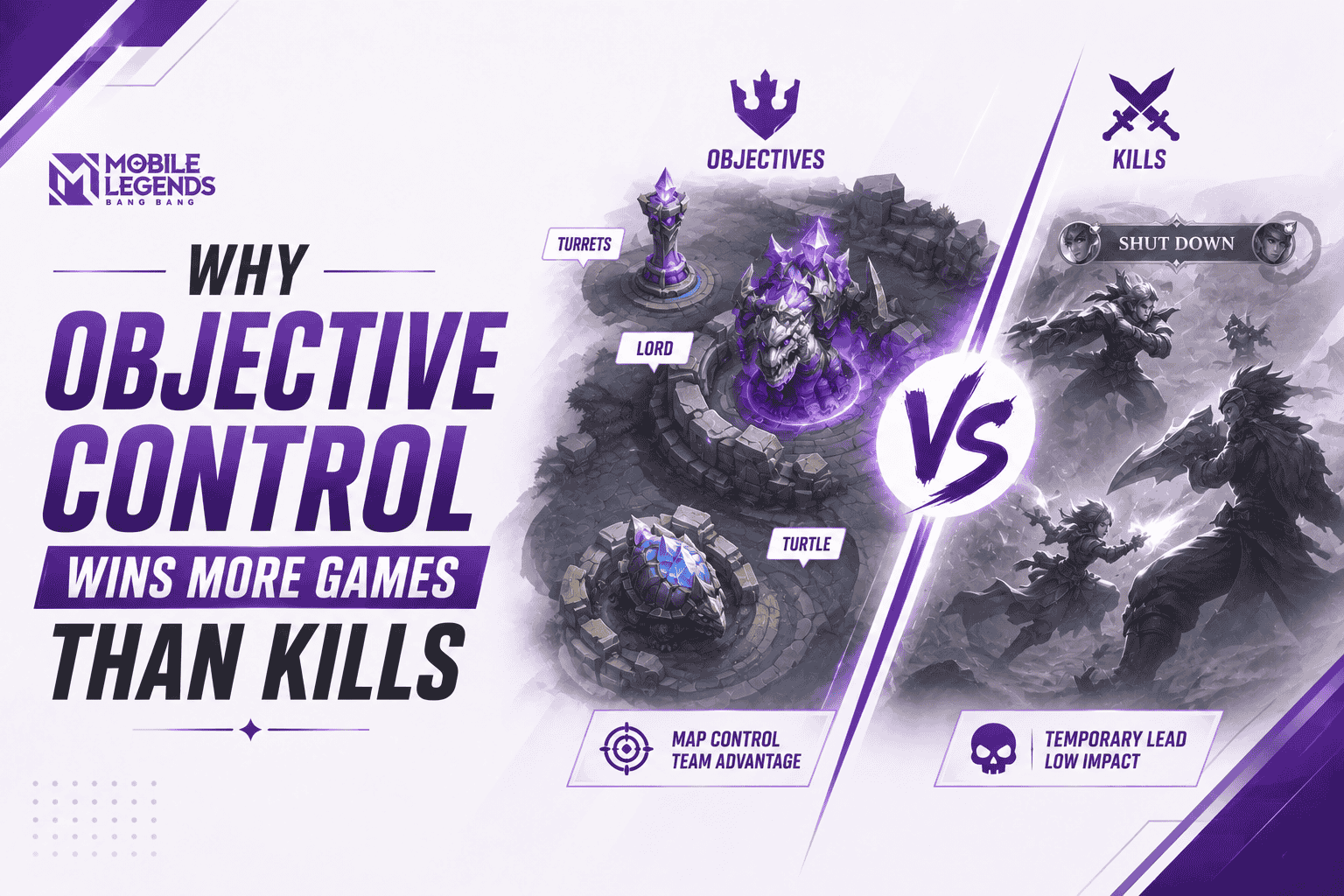
Winning a MOBA isn't about racking up the most kills — it's about securing the Lord/Baron to push the enemy base. When both teams gather around the Lord pit, chaos ensues.
As an assassin jungler, you can't stand in the pit — the Lord deals too much damage, and one stun means instant death. You have to hide in a bush, dash in at the exact right millisecond, hit Retribution, and dash back out. It demands near-perfect mechanical precision.
A tank jungler just walks into the pit, stands still, and presses Retribution when the Lord's HP gets low — the enemy's damage barely matters. Tanks practically guarantee secured objectives.
Summary: Assassin vs. Tank Jungler Comparison
| Feature | Assassin Jungler | Tank Jungler |
|---|---|---|
| Primary role | Eliminate the backline (marksman/mage) | Secure objectives, act as frontline |
| Survivability | Very low — relies on dodging | Extremely high — absorbs damage |
| Objective control (Lord) | Difficult — requires a perfect steal | Easy — can zone out the enemy |
| Team reliance | Low — can solo carry if fed | High — needs teammates to deal damage |
Which One Should You Play in Ranked?
The professional meta isn't always the best meta for your everyday ranked games. Here's how to decide which playstyle fits your matches:
When to play assassin junglers
If you're in solo queue at lower-to-mid ranks (Epic, Legend, low Mythic), assassin junglers are the safer bet. You can't rely on random teammates to deal damage — you need to take the game into your own hands, snowball an early lead, and pick off the enemy team yourself.
When to play tank junglers
If you're in a five-man squad on Discord, or you've reached the highest ranks of Mythic Glory, tank junglers pull ahead. With real communication, you can trust your gold laner and mid laner to deal damage while you secure objectives and absorb the enemy's cooldowns.
Conclusion: Key Takeaways
The jungle role is no longer one-dimensional. It requires reading your own draft, reading the enemy draft, and adjusting your playstyle accordingly.
- Assassins are fragile, high-damage executioners built for solo-carrying uncoordinated games.
- Tanks are immovable objects built to secure map objectives and enable teammates in coordinated, communicative matches.
A truly great jungler masters both styles. Expand your hero pool, learn the strengths of the blade and the shield, and you'll become an unstoppable force in the jungle.
FAQ: Assassin vs. Tank Junglers
Are tank junglers better than assassin junglers in MLBB or Wild Rift?
In organized play with full team communication, tank junglers are generally stronger because they secure objectives reliably. In uncoordinated solo queue, assassin junglers often win more games since they can carry without relying on teammates.
Why do pro teams use tank junglers instead of assassins?
Because securing the Lord/Baron matters more than individual kills. A tank can stand in the objective pit and time Retribution safely, while an assassin risks instant death for the same play. Pro teams also have the coordinated damage a tank needs to function.
Should I play assassin or tank jungler in solo queue?
Assassin jungler is usually the safer choice in solo queue below high Mythic. You can't guarantee your teammates will deal damage, so an assassin's ability to solo carry matters more than a tank's team-enabling utility.