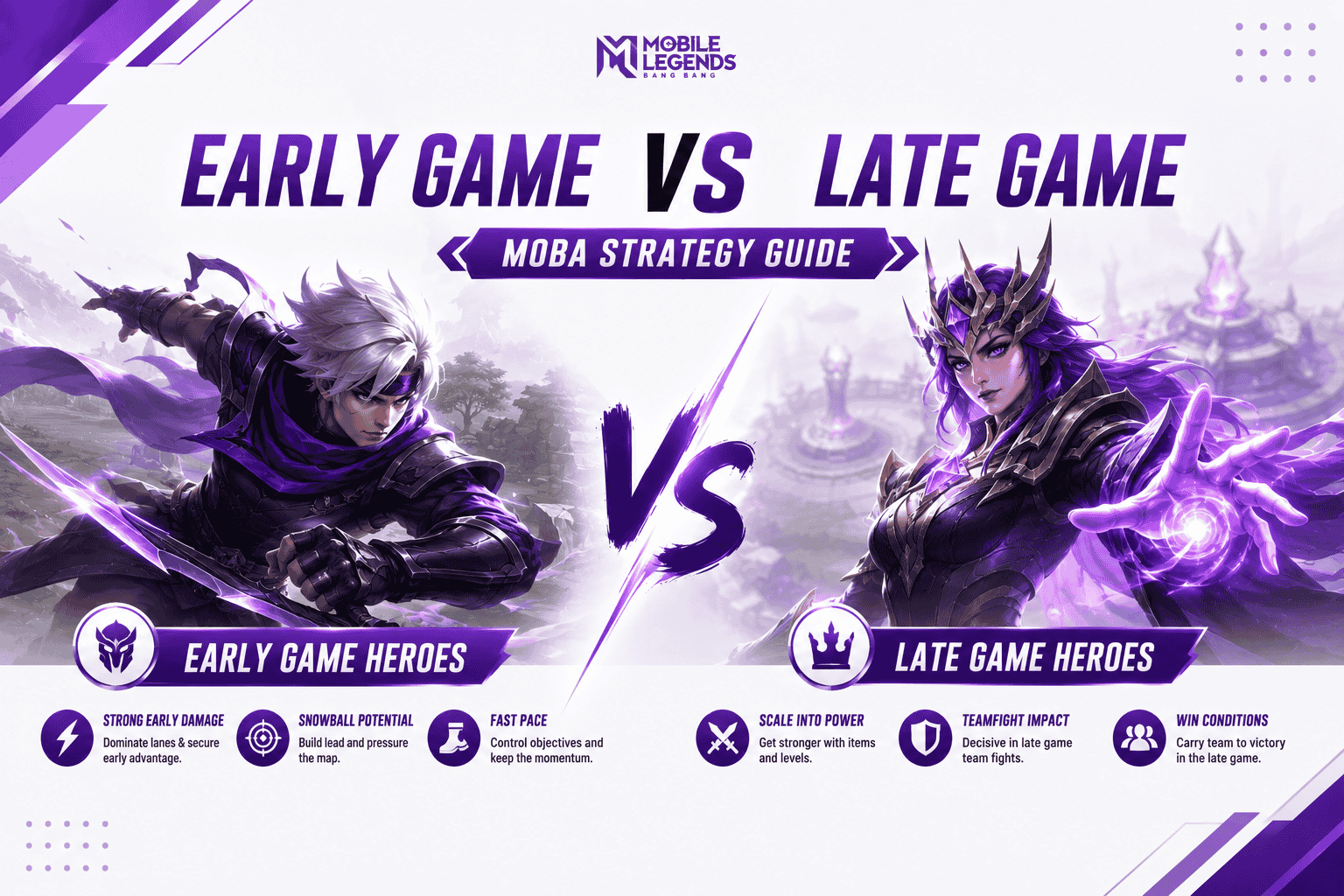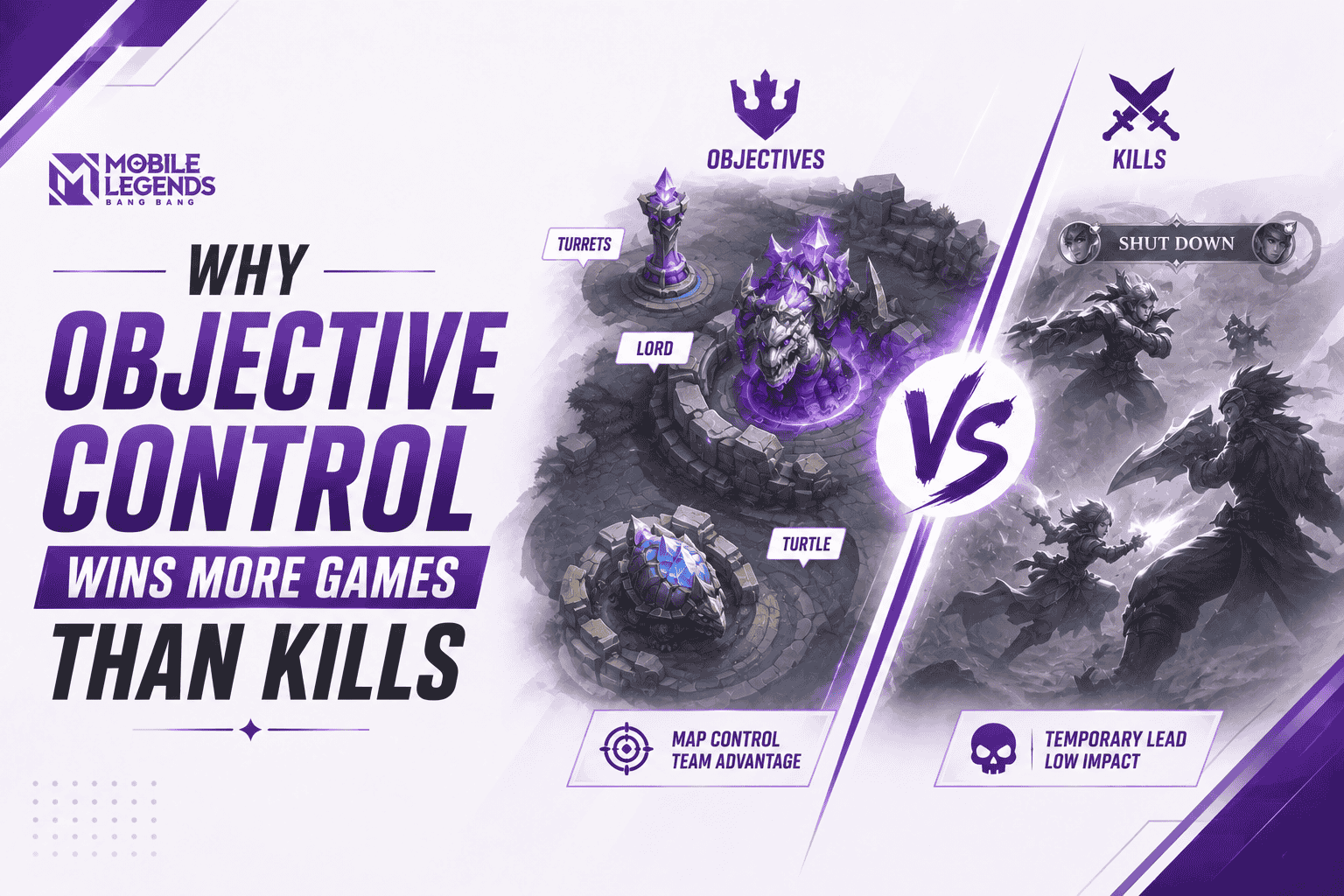

It's the oldest and most toxic debate in mobile MOBA history. The jungler finishes the game with 15 kills, takes MVP, and claims they carried the team. The roamer finishes with 20 assists, takes zero credit, and claims the jungler would be useless without them.
So who's actually right? In massively popular mobile esports titles like Mobile Legends: Bang Bang (MLBB), Honor of Kings, and Wild Rift, the dynamic between the jungler and the roamer defines the entire match.
If you want to understand high-level esports strategy, you need to look past the post-game scoreboard. In this deep dive, we'll break down both roles, weigh their true impact, and finally answer the question: which role actually carries the game?
The Jungler: The Sword of the Team
The jungler is the undisputed offensive powerhouse of the team. Instead of holding a lane to farm minions, they roam the map's neutral territory, killing monsters to gain gold and experience faster than anyone else.
Role and Responsibilities
A jungler has two primary responsibilities: ganking and securing objectives.
- Ganking: The jungler creates unfair fights — rotating to a lane to turn a 1v1 into a 2v1, securing a kill, and letting the team push the enemy tower.
- Securing objectives: The jungler carries a spell (Retribution/Smite) that deals massive damage to neutral monsters, and bears the pressure of securing game-winning objectives like the Lord, Turtle, or Dragon.
The Psychology of the Jungler
Playing jungler is a high-risk, high-reward ego trip. The whole team relies on you to land the fatal blow. Fail to secure a major objective and you take the blame. It demands an aggressive mindset and elite mechanical reflexes.
The Roamer: The Shield (and Brains) of the Team
The roamer — usually a tank or support — is the unsung hero. By buying a roaming item, they sacrifice their own gold and experience so teammates can farm faster. They're chronically under-leveled and under-funded by design.
Role and Responsibilities
A roamer's job centers on macro play and information gathering.
- Providing vision: The roamer acts as a human ward, hiding in bushes to spot enemy rotations so their jungler and marksman never get ambushed.
- Initiation and peeling: In a 5v5 team fight, the roamer either dives in to stun the enemy (initiation) or blocks damage to save a dying teammate (peeling).
The Psychology of the Roamer
Playing roamer takes immense patience and selflessness. You'll die often, sacrificing your life so the marksman can escape. You're the ultimate team player, constantly reading the minimap to dictate the game's tempo.
Early Game Impact vs. Late Game Impact
To judge who has more impact, split the match into two phases — the balance of power shifts dramatically as the game progresses.
The early game (minutes 0–8)
The roamer dominates this phase. The jungler is busy killing creeps and is relatively weak early. The roamer dictates the map: invading the enemy jungle to steal buffs, providing vision so the mid-laner rotates safely, and setting up the ambush for the first Turtle fight. A brilliant roamer gives their jungler a stress-free early game.
The late game (minutes 12+)
The jungler dominates this phase. Everyone has core items by now, and the stakes are massive. The roamer can set up a beautiful 5-man stun, but if the jungler lacks the mechanical skill to follow up and execute, the stun is wasted. Late-game matches are decided almost entirely by who secures the final Lord objective — a responsibility that falls squarely on the jungler's timing.
Summary: Jungler vs. Roamer Comparison
| Feature | The Jungler | The Roamer |
|---|---|---|
| Primary goal | Assassinate carries, secure major objectives | Provide vision, protect, initiate fights |
| Gold dependency | Extremely high — needs items to deal damage | Extremely low — relies on base skill stats |
| Key skill required | Micro mechanics — fast combos, precise timing | Macro strategy — map awareness, positioning |
| Post-game stats | High kills, high gold | High assists, high damage taken |
The Pro Scene Perspective: Who Do the Pros Blame?
At the absolute highest level of professional esports — leagues like the MPL or the KIC — a fascinating trend shows up.
Professional teams are frequently built around legendary roamers. Players like OhMyV33NUS (Blacklist International) or VYN (RRQ) are celebrated as some of the most valuable players in the world. Why? Because in a professional environment, the roamer is the shotcaller.
A mechanically gifted jungler is essentially a deadly weapon — but the roamer is the one aiming it. Professional teams recognize that superior vision control wins the majority of major objectives. Without the roamer clearing bushes, the jungler can't operate safely.
The Final Verdict: Who Carries Harder?
The answer depends entirely on the rank you're playing in.
In lower ranks (solo queue): the jungler has more impact. Playing with uncoordinated strangers means you can't rely on them to follow up, even off a perfect roamer stun. A skilled jungler can simply brute-force the game, taking all the gold and killing the enemy team 1v5.
In higher ranks and pro play: the roamer has more impact. When all ten players have elite mechanical skill, raw damage stops being the deciding factor. The game becomes a battle of information and positioning — and the roamer controls the information, so the roamer controls the outcome.
FAQ: Jungler vs. Roamer
Is jungler or roamer more important in MLBB or Wild Rift?
It depends on rank. In solo queue at lower ranks, a mechanically strong jungler can brute-force wins alone. In high-rank or professional play, the roamer's vision control and shotcalling usually matter more, since raw damage stops deciding fights.
Why do pro teams build around the roamer instead of the jungler?
Because at the pro level, mechanical skill is a given for every player. The deciding factor becomes information and positioning, which the roamer controls through vision and shotcalling — making them the effective "brain" of the team.
When does the jungler have more impact than the roamer?
The jungler tends to dominate the late game (past minute 12), once core items are online and a single well-timed objective steal or team wipe can end the match. Early on (minutes 0–8), the roamer typically has the bigger influence on the map.